
Water fed pole systems have changed how professionals clean high and hard‑to‑reach surfaces, especially windows. By using purified water, these systems deliver streak‑free results without relying on harsh chemicals. In this guide we explain how water fed poles work, the practical advantages they bring to cleaning teams, the materials Anbule uses, and why Anbule is a trusted manufacturer in this category. If you’re tired of ladder risks, slow jobs, or heavy chemical use, this guide shows how a water fed pole setup can make cleaning safer, faster, and more sustainable. Common applications include storefront glass, upper‑story windows, solar arrays, signage, awnings, and many types of architectural cladding.
How a Water Fed Pole System Delivers Streak‑Free Results
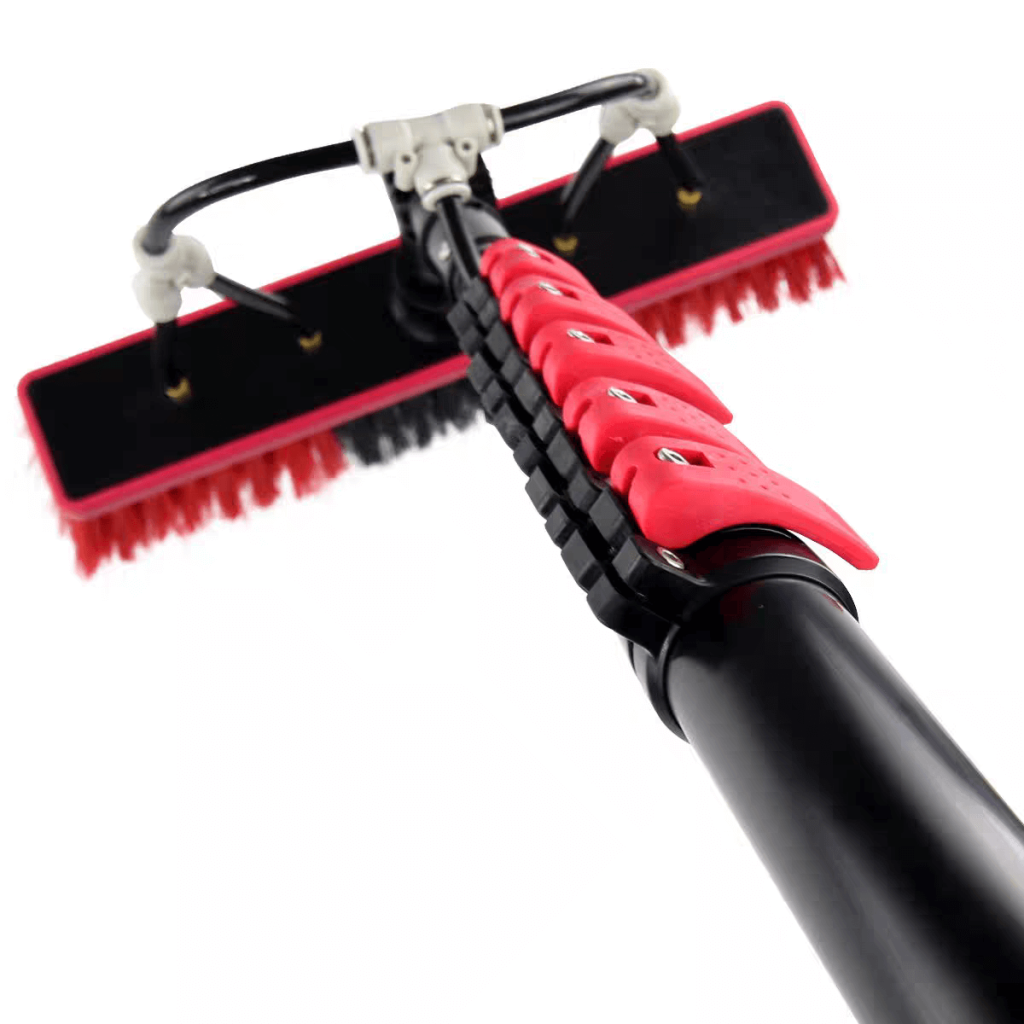
Water fed pole systems push purified water through telescopic poles fitted with brush heads, lifting dirt and rinsing it away without residue. The core idea is simple: when dissolved solids are removed from water, it won’t leave mineral streaks on glass—so you get a clean finish without detergents.
Get a Custom Water Fed Pole Quote from Anbule
What pure‑water technology is and why it matters
Pure‑water technology means using deionized (DI) or reverse osmosis (RO) water with minerals and impurities removed. That “pure” water dissolves and carries away grime, then evaporates without leaving deposits. The result: cleaner surfaces, no chemical residues, and a lower environmental footprint. Filtration approaches commonly combine sediment pre‑filtration, membrane filtration and polishing stages so operators can achieve low conductivity water for reliable streak‑free results.
Research further highlights the effectiveness of deionized water in cleaning applications, even comparing it with other advanced cleaning agents.
Study: Deionized vs. Electrolyzed Water — Cleaning Performance
A comparison tested AIEW (pH 11.5) against warm deionized water (DIW; pH 5.7) across 20–80°C. DIW cleaning effectiveness rose from 20°C up to about 70°C, then fell slightly at 80°C. AIEW performance increased up to 50°C before declining above that. Overall, AIEW removed gelatin from stainless steel far more effectively than warm DIW, with an optimum temperature near 50°C.
How telescopic poles deliver purified water accurately
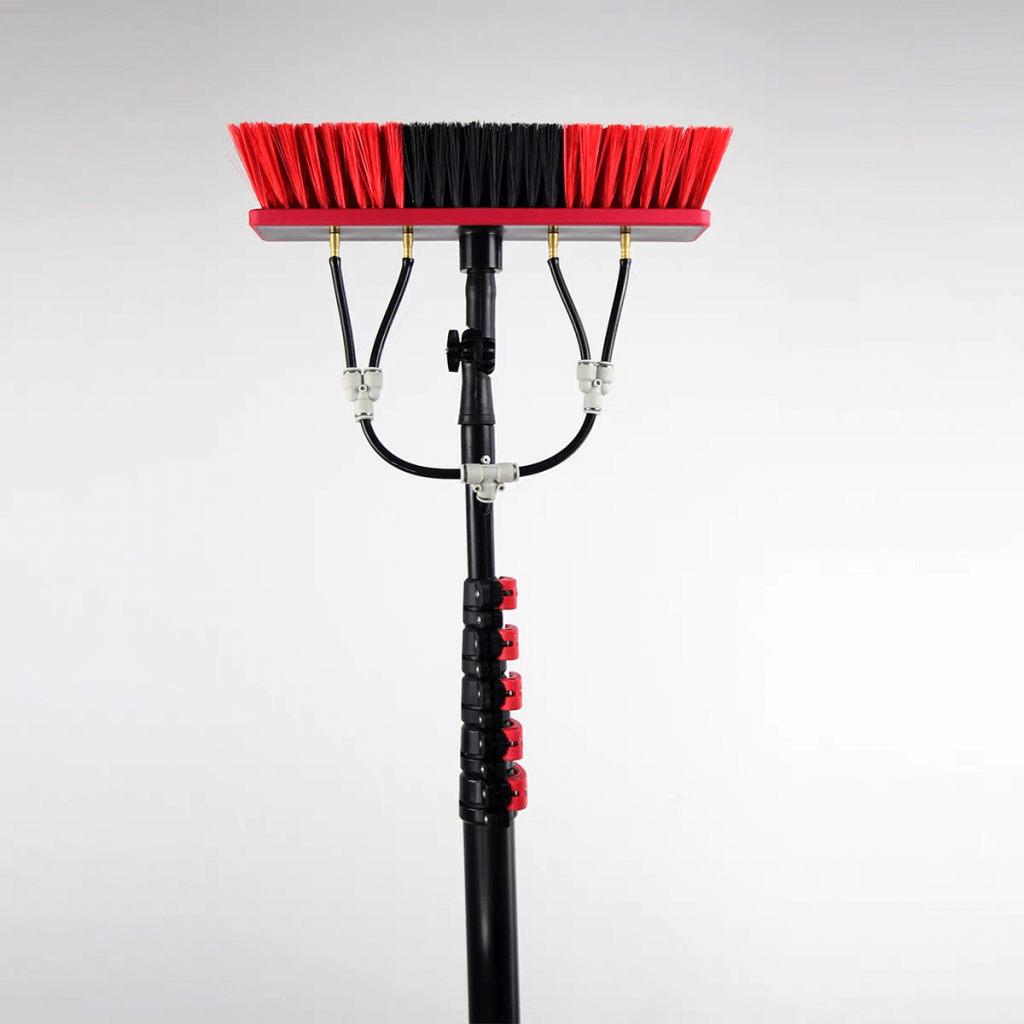
Telescopic poles extend to reach high windows and façades so operators can stay safely on the ground. A hose runs inside or along the pole from the water source to the brush head, delivering a steady, even flow. That steady flow combined with brush agitation lifts dirt efficiently while lowering the risk and time associated with ladders. Brush choices vary by surface—from soft, fine‑filament heads for delicate glass to stiffer brushes for heavier grime—so selecting the right head is important to avoid damage while maximizing cleaning speed.
Key Benefits of Using Water Fed Poles in Professional Cleaning
Water fed poles give cleaning teams meaningful advantages on safety, speed, and sustainability—three factors that directly affect job profitability and client satisfaction.
- Improved Safety: Clean from ground level to cut ladder‑related fall risks and support safer work practices.
- Lower Labor Costs: Faster cleaning cycles and fewer personnel required per job translate to real savings.
- Eco‑Friendly Cleaning: Pure water removes the need for chemical detergents, reducing environmental impact and client exposure to residues.
Operationally, teams see faster turnaround on routes and reduced setup time compared with repeated ladder moves. Clients often value the chemical‑free process for health and environmental reasons, which can be a differentiator when bidding for commercial or sensitive‑site work.
How water fed poles raise safety and cut labor time
Working from the ground reduces fall hazards and simplifies logistics. Because a single operator can reach higher and work faster, crews complete routes sooner and take on more jobs without stretching resources.
Why chemical‑free cleaning matters
Clients increasingly prefer sustainable services that avoid harsh detergents. Chemical‑free cleaning protects workers, occupants, and the environment—and it helps businesses meet stricter local regulations and customer expectations.
Materials and Design Choices That Define Anbule Poles
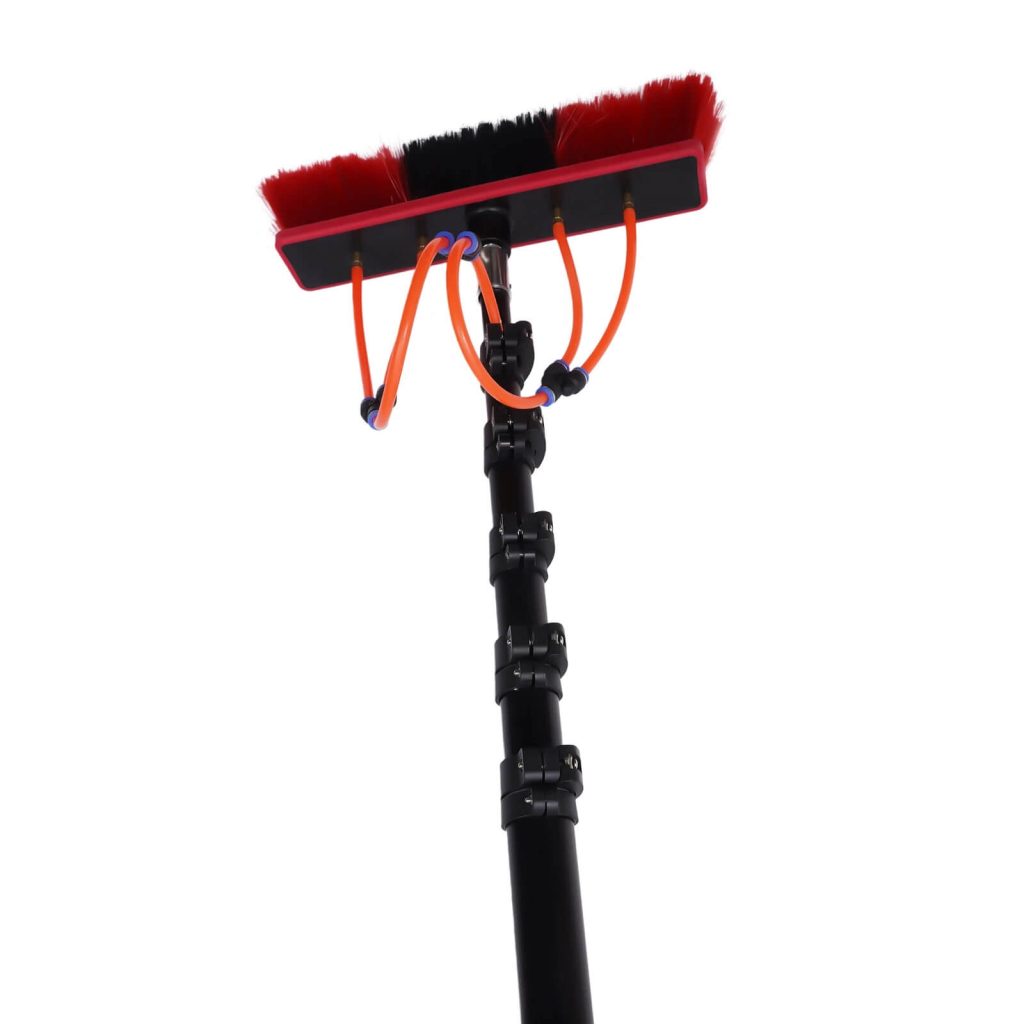
Anbule manufactures water fed poles in materials chosen for strength, weight, and reliability—most commonly carbon fiber and aluminum. Each material balances durability with handling and cost to suit different professional needs. Design details such as joint fittings, twist‑lock sections, ferrules, and hose routing affect rigidity, user control, and leak resistance, so those elements are part of our manufacturing focus.
Get a Custom Water Fed Pole Quote from Anbule
Why carbon fiber is preferred for high‑reach work
Carbon fiber offers an outstanding strength‑to‑weight ratio. Poles made from carbon fiber are lighter to hold for long periods and remain rigid at long reaches, giving operators better control and less fatigue.
How aluminum compares on durability and price
Aluminum poles are robust and often more affordable. They’re slightly heavier than carbon fiber but provide a dependable option for teams that value durability and cost efficiency over minimal weight.
Why Anbule Is the Manufacturer and OEM Partner to Choose
Anbule combines product quality with flexible manufacturing and OEM/ODM services—so brands and distributors can get tailored poles built to spec. Our focus on traceability and quality makes us a reliable supply partner.
What customization and OEM/ODM services Anbule offers
We offer customizable lengths, material choices, and design details so products match your workflow and brand. Our OEM/ODM workstream supports private‑labeling, unique specifications, and production runs to fit your market. We also provide guidance on component selection so finished products suit the intended use case and handling preferences.
How Anbule guarantees quality and dependable global supply
Our production facility exceeds 40,000 square feet and we operate under ISO 9001:2015 processes to ensure consistent quality and traceability. That infrastructure, paired with established logistics, helps us deliver reliable products and support to partners worldwide. Spare parts availability and after‑sales support are part of maintaining uptime for professional operators.
This side‑by‑side helps cleaning professionals pick the pole type that best fits their reach requirements, budget, and daily workload.
Water fed pole systems are a practical evolution in professional cleaning: safer, faster, and kinder to the environment. With Anbule’s focus on quality, customization, and supply reliability, businesses gain access to equipment built for real work and long service life.
What is A Water Fed Pole | FAQs
Which surfaces can you clean with water fed pole systems?
Water fed poles are ideal for smooth, non‑porous surfaces—most commonly glass, solar panels, and many types of cladding. They deliver streak‑free results on flat surfaces; textured or highly porous materials may require additional treatment or manual attention for best results.
How often should poles be serviced or replaced?
Inspect poles, hoses, and brushes regularly—ideally after each shift. Brushes and wear parts are replaceable and will vary by usage. With proper maintenance, a quality water fed pole can last several years; replace any component that shows damage or reduced performance. Keeping spare heads and basic fittings on hand reduces downtime between jobs.
Can water fed pole systems be used in cold weather?
Yes, but iced or very cold water can affect performance. In freezing conditions use heated water systems or prevent freezing in lines and tanks. When possible, schedule jobs in milder windows to avoid ice buildup on surfaces and equipment.
What training is needed to use water fed poles safely and effectively?
Basic training covers system setup, safe pole handling, and brushing/rinsing techniques for different surfaces. Many manufacturers and distributors, including Anbule, provide guidance or training materials to help teams adopt best practices. Hands‑on practice with different brush heads and flows helps operators become efficient quickly.
Are there environmental rules for using water fed pole systems?
Because these systems avoid detergents, they align with many environmental goals. Still, check local rules on water use and runoff—especially in areas with restrictions or where runoff is managed carefully. Using pure water systems generally supports greener operations.
How much does a water fed pole system cost?
Prices vary by material, pole length, and filtration or heating options. Entry‑level systems can start in the lower hundreds, while fully equipped commercial setups may cost several thousand dollars. Carbon fiber models and advanced filtration add to the price but improve handling and performance. Consider total cost of ownership, including filters, spare parts, and training, when comparing options.
Get a Custom Water Fed Pole Quote from Anbule
Conclusion
Water fed pole systems improve safety, speed, and sustainability for professional cleaners. They deliver streak‑free results without chemicals and scale from single crews to enterprise operations. Choosing Anbule means access to durable, customizable poles and a manufacturing partner focused on quality and global support. Explore our range and see how pure‑water cleaning can raise your service standards.
 English
 Deutsch
 Français
 Polski
 Português do Brasil
 Español
 日本語
日本語 Русский
 العربية
 Italiano
 Nederlands
 Türkçe
 한국어
한국어