
Dirty panels produce less power. Dust, bird droppings and other debris accumulate on glass and reduce system output. This guide covers why routine cleaning matters, which commercial tools work best, and how to select a cleaning system for large PV installations — including how Anbule’s purpose-built equipment can streamline maintenance.
Why Is Regular Cleaning Essential for Commercial Solar Panels?
Keeping commercial arrays clean protects energy production. Surface debris blocks sunlight and lowers output; soiling can cut yield significantly depending on site conditions. Scheduled cleaning preserves revenue and long-term system health.
Get a Custom Solar Panel Washing Machine Quote from Anbule
How Does Soiling Affect Solar Panel Energy Output?
Soiling reduces light reaching photovoltaic cells and lowers electrical generation. A thin dust layer can reduce output noticeably, while heavier grime or seasonal pollen has an even larger effect. Local climate, pollution sources and panel slope influence the loss, and regular cleaning limits those impacts.
To tackle persistent dust in dry regions, engineers are developing robotic and water‑free cleaning methods that keep arrays productive where water is scarce.
Robotic dry-cleaning approaches for maintaining plant output
This project addresses efficiency losses from dust accumulation on solar modules. It proposes an autonomous cleaning unit that travels across panel surfaces using pneumatic suction cups and applies dry cleaning — for example, rotating cylindrical brushes and vacuum systems — to remove dust on a scheduled basis. The design targets locations where water is limited while aiming to restore and sustain plant output.
Design and development of solar panel cleaning system, 2015
What Are the Recommended Cleaning Frequencies for Large PV Arrays?
Frequency depends on site. Rainy regions often self-clean, while dusty or arid sites may need attention every few weeks. A common baseline for commercial arrays is one to two professional cleanings per year, adjusted for seasonal pollen, dust storms or local conditions.
What Are the Best Commercial Solar Panel Cleaning Equipment Options?
Tool choice affects speed, safety and results. Teams often combine manual and automated options based on array size, roof access and water availability.
- Manual cleaning tools: Brushes, squeegees and water‑fed poles provide controlled, gentle cleaning that protects glass and frames.
- Automated cleaning systems: Rotating brushes, tracked units or water jets reduce labor on large installations and deliver consistent cycles.
Recent studies describe the mechanics and control systems behind brush-based automatic cleaners, which help synchronize movement and brushing for smooth, repeatable cycles.
Automatic brush-based cleaning: mechanical and control considerations
This paper presents an automatic brush-based PV cleaner that coordinates three motors for smooth periodic cleaning as it travels horizontally across panels. The mechanical layout uses linear guides to support an aluminum carriage holding the drive motors and rotating brush. Translational and rotational motions are coordinated by a controller implemented on an Arduino Mega, demonstrating how mechanical and control design combine for reliable brush-based cleaning.
Adaptive position control of DC motor for brush-based photovoltaic cleaning system automation, SZ Islam, 2023
How Does Anbule’s Solar Panel Washing Machine Improve Cleaning Efficiency?
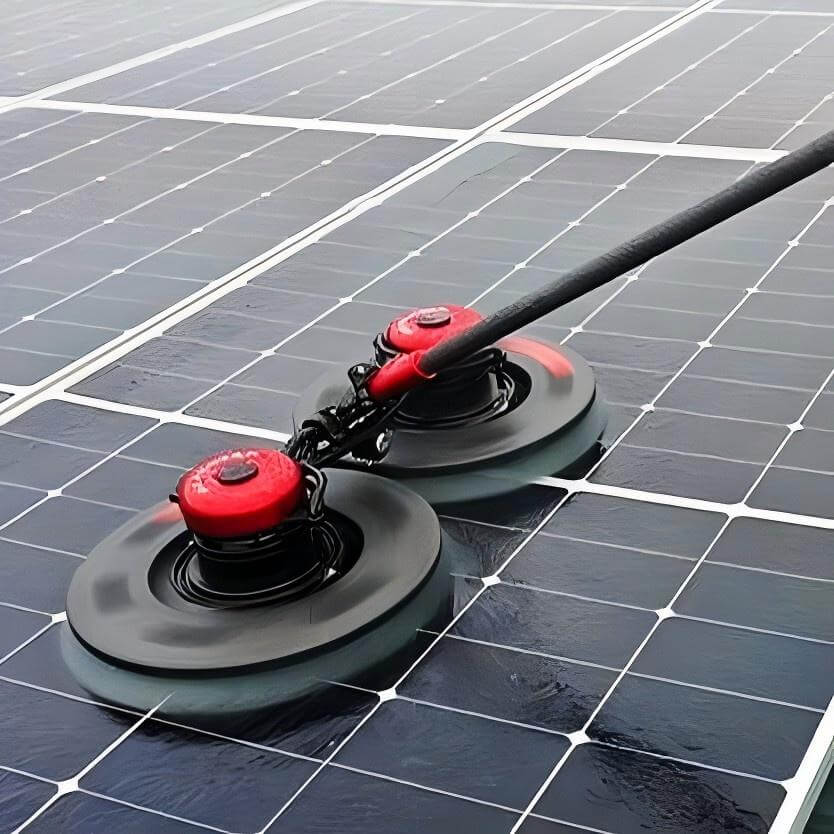
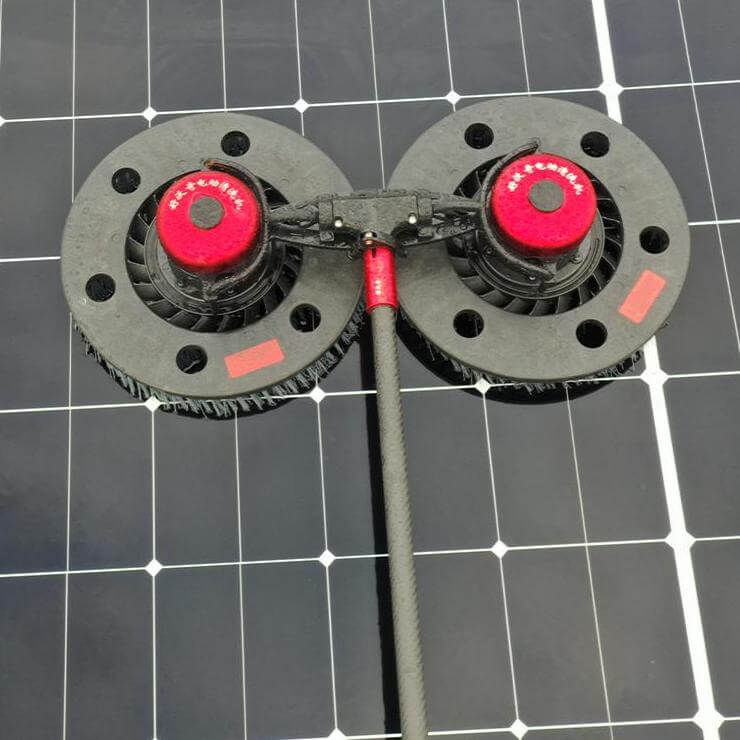
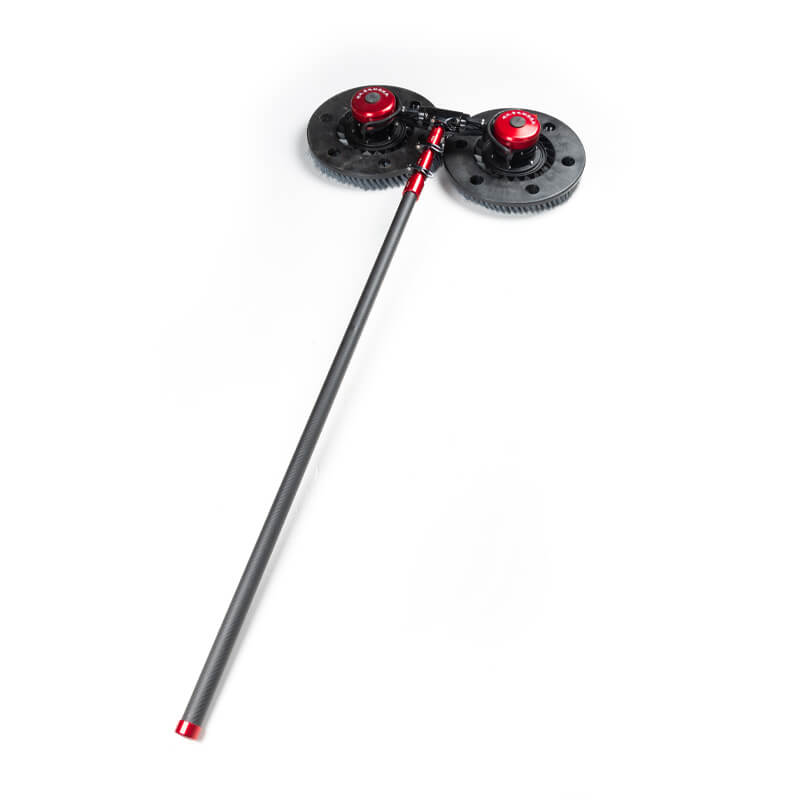
Anbule’s solar panel washing machine speeds commercial cleaning with dual rotating brush heads and an integrated water pump. The brushes dislodge grime while controlled water flow rinses residue, reducing cleaning time and restoring energy yield without damaging panels.
What Are the Benefits of Using Telescopic Poles for Solar Panel Cleaning?
Telescopic poles are practical and safe for many jobs:
- Reach and accessibility: Extend to clean elevated or awkward panels without ladders or scaffolding.
- Reduce operator fatigue: Ergonomic designs let technicians cover more area with less strain, improving speed and consistency.
Used correctly, telescopic poles enhance safety and productivity for routine maintenance.
How to Choose the Right PV Cleaning System for Large Solar Arrays?
Match the system to site scale, soil type and budget. Consider cleaning frequency, water availability and labor capacity. The best choice balances upfront cost, ongoing labor and expected energy recovery.
- Automated vs. semi‑automatic systems: Fully automated units lower labor needs but cost more up front; semi‑automatic options can reduce capital expense while improving efficiency.
- Customization: Tailored brush profiles, carriage widths and control settings let you adapt equipment to panel dimensions, roof layout and local soiling patterns.
Get a Custom Solar Panel Washing Machine Quote from Anbule
What Factors Influence the Selection of Automated vs. Semi-Automatic Cleaning Solutions?
Key considerations include:
- Cost: Automated systems usually mean higher initial spend but can lower recurring labor costs on large sites.
- Maintenance: Automated units may require technical servicing; semi‑automatic systems are often simpler to maintain in the field.
Weigh these factors against expected energy gains and operational constraints to determine the best fit.
Field studies also show semi‑automatic mechanisms can yield meaningful efficiency improvements where full automation isn’t practical.
Semi-automatic cleaning: practical efficiency gains
Since the 1990s solar has become a leading renewable source, but dust accumulation still reduces module efficiency by blocking sunlight. This study developed and tested a semi‑automatic dust‑cleaning mechanism — a recent step in PV cleaning tech — and reported measurable improvements in panel efficiency for the experimental setup.
Performance Analysis of Semi-Automatic Solar Panel Cleaning System, SR Bhandari, 2024
How Does Customization Enhance Commercial Solar Cleaning Equipment?
Customization aligns tools to the problem: brush profiles, adjustable carriers and control tweaks let equipment clean thoroughly without damaging panels. Modular options and finishes help contractors present a professional, reliable service.
How to Maximize ROI with Professional Solar Panel Cleaning Solutions?
To maximize ROI, use predictable, scheduled maintenance that recovers lost generation. Clean panels produce more electricity, directly improving revenue and shortening payback time.
- Energy recovery benefits: Regular cleaning can recapture lost output and convert maintenance into recovered revenue.
- Cost savings from maintenance: Preventative cleaning lowers damage risk and helps panels reach expected service life, avoiding costly repairs or early replacements.
What Are the Energy Recovery Benefits of Regular Cleaning?
Removing soiling restores a panel’s ability to convert sunlight to power. Depending on conditions, cleaning can significantly increase generation, lowering electricity costs and improving project returns.
How Does Anbule Support B2B Partnerships and After-Sales Service?
Anbule supports B2B partners with training, maintenance support and customization to match client needs. We collaborate with professional cleaning companies so equipment remains reliable in the field and crews run jobs efficiently — from setup to after‑sales care.
Effective cleaning keeps arrays productive and protects the value of solar assets. Choosing the right equipment and schedule preserves efficiency and extends system life. Anbule’s solutions are built to make maintenance safer, faster and more reliable.
How to Clean Solar Panels | FAQs
Get a Custom Solar Panel Washing Machine Quote from Anbule
What are the environmental impacts of solar panel cleaning?
Cleaning restores renewable generation and can reduce reliance on fossil fuels, but it may use water or occasionally chemicals. Minimize impacts by using water‑efficient methods, eco‑friendly detergents or dry cleaning technologies, especially in water‑stressed regions.
Can solar panel cleaning be done during any weather conditions?
Schedule cleaning on dry, mild days. Avoid heavy rain, snow or freezing conditions because wet or icy surfaces increase safety risks and can damage equipment. Overcast days often reduce spotting and keep crews comfortable.
How can I ensure the safety of workers during solar panel cleaning?
Protect workers with training, PPE (gloves, helmets, harnesses as needed) and tools that reduce risk, such as telescopic poles to limit ladder use. Follow local safety regulations, conduct audits, and use fall‑protection systems on roofs and elevated structures.
What are the signs that solar panels need cleaning?
Signs include a drop in energy yield versus historical performance, visible dirt on glass, recent dust events or bird activity. Use production monitoring and scheduled visual inspections to catch soiling before it impacts output.
Are there any DIY methods for cleaning solar panels?
Homeowners with small arrays can use a soft brush or sponge, mild soap and a gentle rinse, avoiding abrasives and high‑pressure washers. Use stable access equipment or telescopic poles. For large commercial systems, hire professionals with proper gear and safety procedures.
What maintenance is required for solar panel cleaning equipment?
Conduct routine checks: inspect brushes and nozzles for wear, clear clogs, test pumps and motors, and follow manufacturer service schedules. Proper storage and periodic calibration extend equipment life and ensure consistent performance.
Conclusion
Regular cleaning is a high‑impact way to protect performance and maximize ROI. The right mix of tools — from telescopic poles to automated washers — improves safety, saves time and restores generation. Anbule’s products and support help operators run efficient, repeatable maintenance programs; explore our lineup to find the best solution for your site.
 English
 Deutsch
 Français
 Polski
 Português do Brasil
 Español
 日本語
日本語 Русский
 العربية
 Italiano
 Nederlands
 Türkçe
 한국어
한국어