
Manufacturers sometimes describe panels as “self‑cleaning,” but rain and gravity only remove some dirt. This guide explains how soiling cuts output, when scheduled cleaning pays, and practical cleaning options — including Anbule’s semi‑automatic solar‑panel washing machine — that help recover production and save labor.
Field experience and research align: regular cleaning is a key factor in maintaining PV system efficiency, and newer methods are improving results.
Solar panel cleaning: why it matters and how methods are evolving
This review emphasizes keeping photovoltaic panels clean to protect energy yield. It examines how dust accumulates, documents global power losses tied to soiling, and surveys evolving mitigation methods — from robotic cleaners to surface treatments — designed to improve PV performance in dusty environments.
A comprehensive investigation of solar panel cleaning technologies: A review study, MT Akkoyunlu, 2021
Are solar panels truly self‑cleaning, or do they need regular maintenance?
Panel glass sheds some dirt in rain, but rainfall often leaves stubborn films. In dry climates, near roads or in polluted cities, soiling accumulates and reduces output, so routine maintenance is usually needed to protect performance.
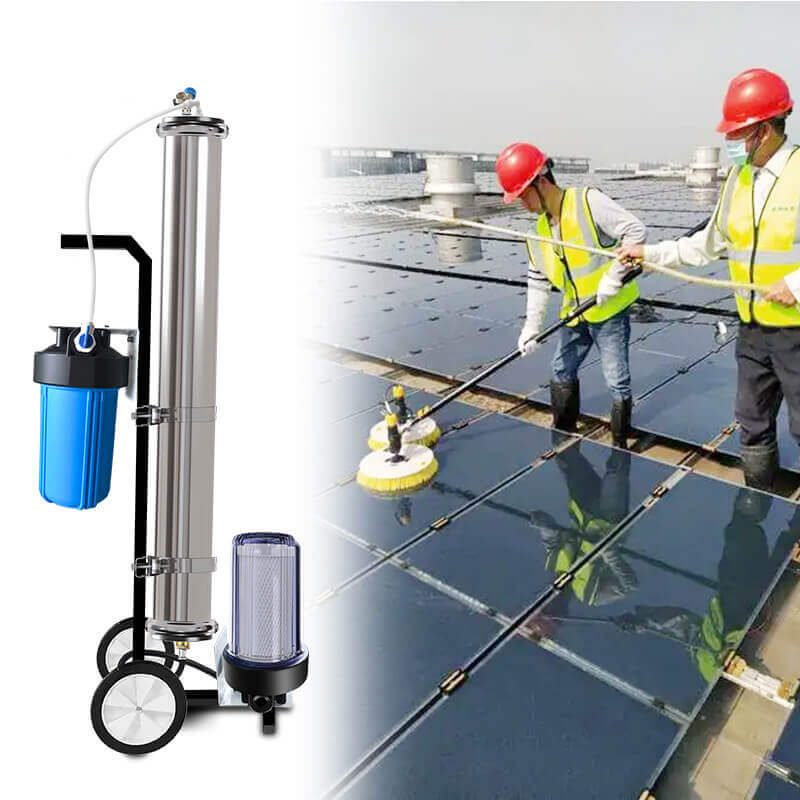
Get a Custom Solar Panel Washing Machine Quote from Anbule
What limits a panel’s self‑cleaning ability?
Fine dust, pollen, bird droppings and road grime can adhere to glass. Local factors — humidity, airborne particles, nearby vegetation and traffic — determine how quickly a film builds and how effective natural rinsing will be.
Researchers are also testing coatings to make dirt less likely to stick, reducing cleaning frequency.
Self‑cleaning coatings: a proactive way to cut maintenance
Conventional manual and mechanical cleaning can be inconsistent and costly. Self‑cleaning coatings — especially super‑hydrophobic and super‑hydrophilic finishes — are gaining attention for their potential to reduce cleaning frequency and lower long‑term maintenance costs in PV systems.
A review of self-cleaning coatings for solar photovoltaic systems: theory, materials, preparation, and applications, H Lu, 2023
How much does soiling reduce panel performance?
Soiling commonly cuts output in the 10%–20% range depending on site and contamination. Left unaddressed over time, those losses reduce energy yield and ROI. In extreme, dusty or polluted areas, losses can be much larger, so proactive cleaning is important.
When pollution or dust is severe, cleaning can recover a large share of lost generation.
Soiling can slash PV output by more than half — cleaning matters
The study found that without cleaning — relying only on precipitation — PV generation in heavily polluted and desert regions can fall by over 50% because of particulate matter (PM). In those cases, soiling accounts for the majority of the total reduction, highlighting the clear benefit of cleaning in low‑rain, high‑pollution areas.
Global reduction of solar power generation efficiency due to aerosols and panel soiling, X Li, 2020
Best methods and equipment for cleaning solar panels
There’s no one‑size‑fits‑all solution. Options range from manual rinses to fully automated systems; each varies by cost, labor and effectiveness. Choose based on array size, site conditions and budget.
How automatic and semi‑automatic cleaning systems work
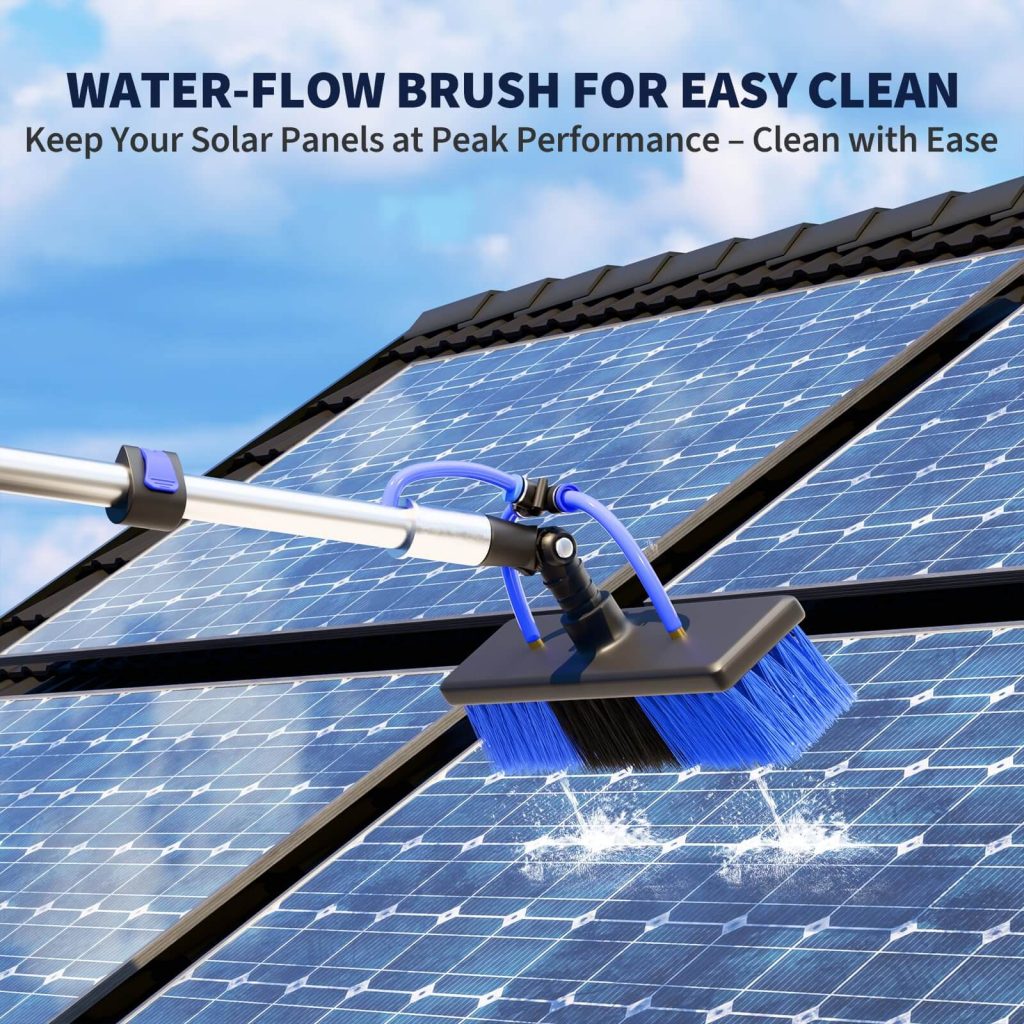
Automatic and semi‑automatic cleaners use rotating brushes and low‑pressure water jets to loosen and wash away dirt without manual scrubbing. Semi‑automatic systems — like Anbule’s solar panel washing machine — pair automation with operator control so cleaning intensity matches local soiling.
Advantages of commercial solar panel cleaning equipment
Professional systems bring clear benefits:
- Time savings: Machines clean large arrays faster, reducing downtime.
- Lower labor costs: Fewer people and less manual work lowers OPEX.
- Better cleaning quality: Purpose‑built tools remove grime more consistently, aiding energy recovery.
Robust equipment can reduce visits and increase recovered energy, improving long‑term economics.
How professional PV‑plant cleaning maximizes energy output
Scheduled, professional cleaning keeps arrays near designed output and extends component life. For utility‑scale plants, cleaning is an operational routine that protects yield and reduces unexpected underperformance.
What features make Anbule’s solar panel washing machine effective?
- Dual brush‑head technology: Two brush heads cover a 710 mm sweep for consistent cleaning per pass.
- High‑pressure pump: A 600 W brushless motor drives the pump to remove stubborn dirt while remaining safe for glass.
- Modular design: Interchangeable brush plates let you adapt to pollution levels and surface conditions.
These features make Anbule’s washer a practical option when repeatable, low‑risk cleaning is needed.
How regular cleaning extends panel life and lowers costs
Cleaning removes abrasive buildup and films that reduce output or cause hot spots. Regular maintenance keeps production steady, lowers utility costs and reduces repair or replacement risk — delivering long‑term savings for residential and commercial systems.
Key benefits for commercial installations
For commercial sites, regular cleaning protects revenue and ROI. The main benefits are:
- Increased energy efficiency: Clean modules produce more power per installed kW.
- Cost effectiveness: Recovered energy often outweighs cleaning costs over time.
- More reliable performance: Well‑maintained arrays suffer fewer unexpected drops and issues.
Get a Custom Solar Panel Washing Machine Quote from Anbule
How often to clean commercial panels
Frequency depends on local conditions. As a rule, clean at least once or twice a year; increase frequency where dust, pollen or pollution are high. Monitor output to fine‑tune the schedule and clean when unexplained, persistent drops appear.
What ROI can businesses expect?
Investing in cleaning (equipment or services) typically shows a fast payback from recovered generation and fewer service calls. Case studies often report recovery of up to 20% of lost output after cleaning, making maintenance economically sensible for many commercial sites.
While panels shed some dirt naturally, planned maintenance is essential to protect efficiency and lifespan. Match your approach to site conditions to maximize returns. For tailored recommendations or to learn about our PV plant cleaning services, you can contact us.
Are Solar Panels Self‑Cleaning | FAQs
How can I tell if my solar panels need cleaning?
Monitor energy output. A sustained drop of roughly 10%–20% versus expected production suggests soiling. Do a visual check for dust, bird droppings or tree debris, and inspect more often near dust sources or roads.
Are there any risks associated with cleaning solar panels myself?
Yes. Roof access can be dangerous and abrasive tools or harsh chemicals can damage panels or void warranties. If you clean yourself, use soft brushes, mild soap and safe access. For large or hard‑to‑reach arrays, hire professionals.
What environmental factors should I consider when cleaning solar panels?
Consider dust, pollen, pollution, nearby industry and seasonal leaf drop. Rain helps but won’t remove all grime in dry regions. Use these factors to set cleaning frequency.
Can self‑cleaning coatings completely eliminate the need for maintenance?
Coatings can reduce cleaning frequency but don’t remove the need for inspections and occasional cleaning, especially in high‑pollution or dusty areas.
What are the costs associated with professional solar panel cleaning services?
Costs vary by location and system size. Homeowner cleans commonly run in the low hundreds; commercial pricing scales with size. Compare costs to expected recovered energy to evaluate payback.
How do I choose the right cleaning method for my solar panels?
Match method to needs: manual cleaning is low‑capex but labor‑intensive; semi‑automatic balances cost and performance; automatic systems suit very large arrays. Factor in soiling rates, safety and operating costs.
What should I do if my solar panels are damaged during cleaning?
Stop immediately, photograph the damage and notify the installer or manufacturer and your insurer if needed. Seek a professional assessment before further action and consider using professionals going forward.
Conclusion
Panels shed some dirt naturally, but “self‑cleaning” rarely eliminates maintenance. Regular, appropriate cleaning preserves output, extends equipment life and protects ROI. For tailored guidance or to discuss professional cleaning solutions, please contact us. Let’s make sure your system performs as designed.
 English
 Deutsch
 Français
 Polski
 Português do Brasil
 Español
 日本語
日本語 Русский
 العربية
 Italiano
 Nederlands
 Türkçe
 한국어
한국어