
Keeping solar panels clean supports steady energy production and long service life. The water you use for washing matters: this article examines whether tap water is a safe choice, the risks from mineral-rich water, preferred water options, how professional equipment uses purified water, and practical maintenance tips to protect output.
Is Tap Water Safe for Cleaning Solar Panels? Risks and Considerations
Tap water is convenient but can contain dissolved minerals and treatment chemicals that risk panels. Calcium, magnesium and sodium leave deposits after evaporation, forming a film that reduces light transmission. Disinfectants such as chlorine can leave residues or interact with materials. Occasional rinsing with tap water is acceptable, but routine use of unconditioned tap water may cause gradual performance loss and cosmetic buildup.
Get a Custom Water Fed Pole Quote from Anbule
What Mineral Deposits Does Tap Water Leave on Solar Panels?
Hard water deposits form as water evaporates. Common salts include calcium carbonate and magnesium carbonate, with traces of sodium and other minerals. These dry into a cloudy or crusty layer that scatters sunlight and blocks parts of the panel surface. Left unchecked, buildup lowers effective irradiance and reduces power output.
How Do Mineral Deposits Affect Solar Panel Efficiency?
Dirt and residue have a measurable effect: industry sources report output drops of roughly 5–15% depending on severity and local conditions. Over months, that loss adds up financially. Using water that leaves deposits can undo the benefits of regular cleaning instead of maintaining performance.
What Types of Water Are Recommended for Solar Panel Cleaning?
For residue-free results, use low-mineral water. Deionized (DI) and reverse osmosis (RO) water are preferred because they remove most dissolved solids and greatly reduce deposit risk. Distilled water is also a suitable alternative when DI or RO aren’t available.
Why Is Demineralized or Deionized Water Better Than Tap Water?
Deionized water has nearly all dissolved ions removed, so it leaves no mineral trace when it dries. That yields cleaner surfaces without relying on strong detergents, protecting both performance and panel glass over time.
How Does Reverse Osmosis Water Improve Solar Panel Maintenance?
Reverse osmosis forces water through a membrane that removes minerals and contaminants. RO water rinses dirt without leaving salts or residues and can reduce the need for chemical cleaners that might harm panels or the environment.
How Does Professional Solar Panel Cleaning Equipment Complement Water Quality?
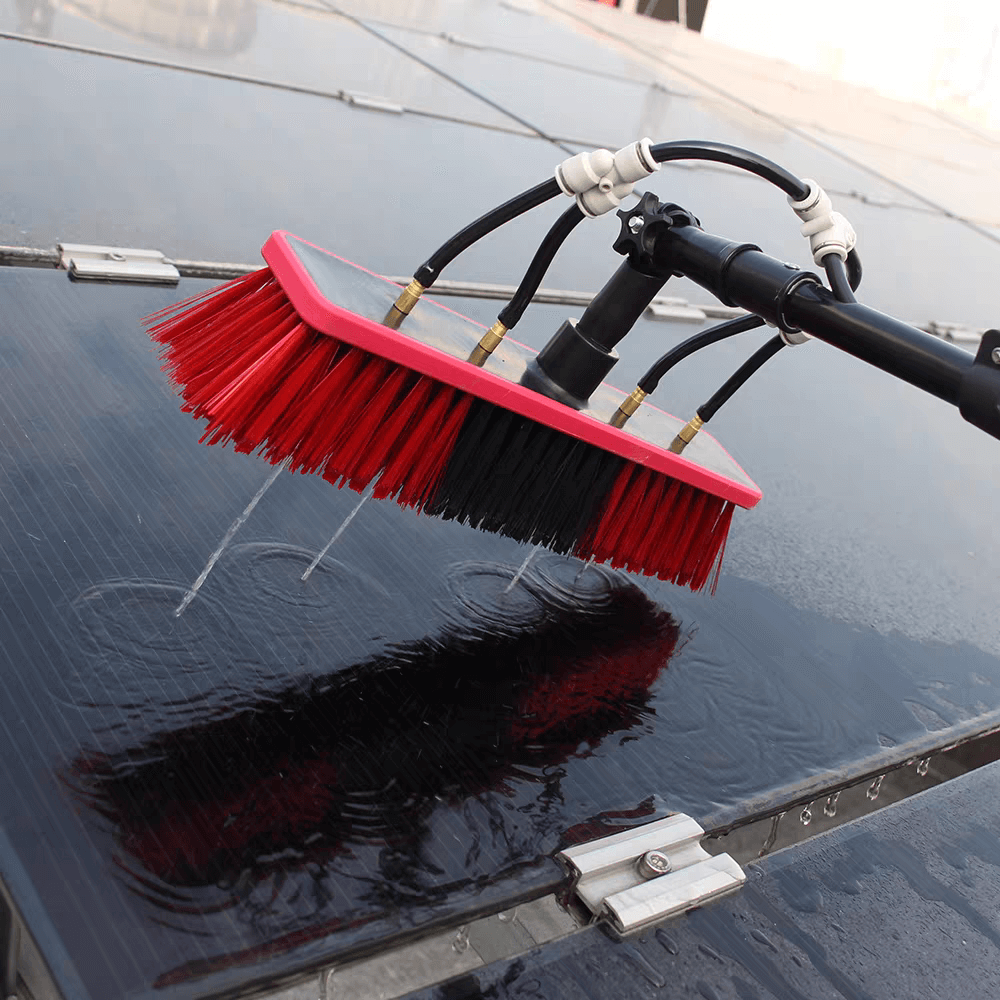
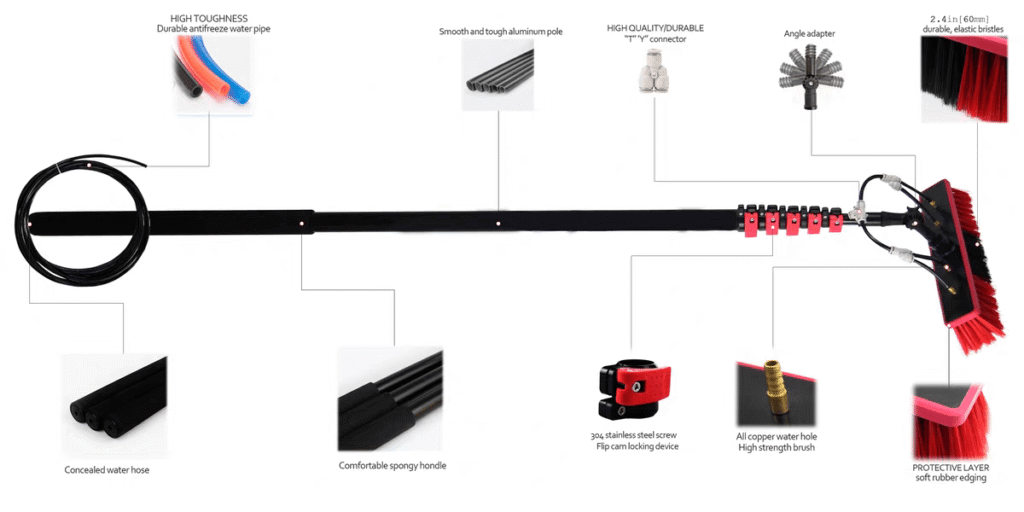
Professional systems are designed to use purified water efficiently and avoid redepositing contaminants. They combine controlled water delivery, filtration and gentle agitation to remove dirt with minimal mechanical stress. When paired with DI or RO water, these systems give the cleanest finish with the least risk of mineral buildup.
What Features Make Anbule’s Solar Panel Washing Machine Ideal for Use with Pure Water?
Anbule’s solar panel washing machine is built for pure-water cleaning: a double-brush head lifts dirt without scratching and a high-pressure pump maintains steady, effective flow. The result is fast, thorough cleaning without harsh chemicals.
How Does Equipment Design Prevent Mineral Deposit Build-Up During Cleaning?
Features like in-line filtration and controlled rinse cycles keep impurities out of the water stream before it reaches the panels. Cleaner input plus engineered delivery minimizes the chance of leaving mineral traces and reduces the need for repeat spot cleaning.
What Are Best Practices for Cleaning Solar Panels to Maximize Efficiency?
Follow a consistent schedule, use low-mineral water, and choose equipment and techniques that protect glass and frames. Regular maintenance preserves output and prevents staining or etching.
Get a Custom Water Fed Pole Quote from Anbule
How Often Should Commercial Solar Panels Be Cleaned to Avoid Hard Water Damage?
For commercial arrays, cleaning every 6–12 months is a good baseline to prevent hard water deposits and heavy soiling. Shorten that interval in dusty, coastal, high-pollen areas, or where bird activity is frequent. Tailor frequency to monitoring and local conditions instead of a fixed calendar.
What Safety and Water Management Protocols Should Professionals Follow?
Professionals should use appropriate PPE, secure fall protection when required, and keep equipment maintained and calibrated. Conserve water with efficient pumps and brushes, and follow local runoff and wastewater rules. Responsible water handling protects the site and keeps cleaning sustainable.
If you have questions about maintaining your system, need professional cleaning, or want to learn more about Anbule’s solutions, please contact our team. We’re ready to help optimize your solar performance.
Can You Clean Solar Panels with Tap Water | FAQs
Can I use distilled water for cleaning solar panels?
Yes. Distilled water is low in minerals and leaves minimal residue, making it an effective choice. Like DI and RO water, distilled water reduces the chance of mineral buildup that scatters light and lowers output.
What are the environmental impacts of using tap water for solar panel cleaning?
Tap water can introduce chemicals and minerals into runoff that affect soil and vegetation. Chlorine and additives can be harmful in sensitive areas, and mineral deposits on panels reduce efficiency. Using purer water and limiting chemical cleaners lowers environmental risk.
How can I tell if my solar panels need cleaning?
Check for visible dirt, bird droppings or a cloudy film on the glass and monitor energy production for unexplained drops. If output falls compared with historical performance and weather isn’t the cause, cleaning is likely needed.
Are there any DIY methods for cleaning solar panels safely?
Yes. For DIY cleaning use a soft brush or sponge, a mild cleaner if necessary, and low-mineral water (distilled or deionized when possible). Avoid abrasives, clean during cooler parts of the day to reduce streaks, and prioritize safe access—hire a pro if panels are hard to reach.
What should I do if I notice damage to my solar panels?
If panels show cracks, deep scratches or electrical issues, stop if safety is a concern and contact a qualified technician. Prompt assessment and repair prevent further damage and restore reliable performance.
Can weather conditions affect the cleaning frequency of solar panels?
Absolutely. Heavy rain can reduce manual cleaning needs by washing away loose dirt, while dusty or pollen-heavy environments require more frequent attention. Adjust your schedule based on local weather and on-site soiling rates.
Conclusion
Water quality matters. Using deionized, reverse osmosis or distilled water minimizes mineral deposits and helps keep panels operating at peak. Pair pure water with the right equipment and a sensible maintenance plan to protect output and extend system life. For tailored advice or professional cleaning options, explore Anbule’s solutions or get in touch with our team.
 English
 Deutsch
 Français
 Polski
 Português do Brasil
 Español
 日本語
日本語 Русский
 العربية
 Italiano
 Nederlands
 Türkçe
 한국어
한국어