
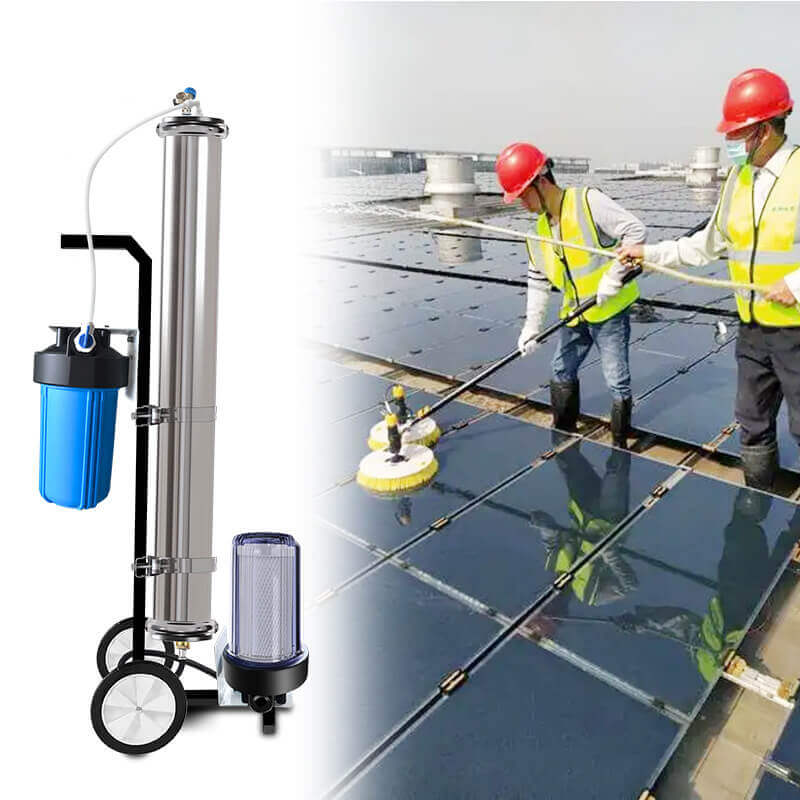
Keeping solar panels clean protects performance and long‑term value. Dust, pollen, bird droppings and other debris accumulate and reduce sunlight reaching the cells. Below we summarise why cleaning matters, the benefits, and practical methods — from manual care to specialist tools like solar panel washing machines.
Benefits of Regular Solar Panel Cleaning
Routine cleaning improves output, lowers operating costs and helps equipment last longer.
- Increased energy production: Clean panels collect more light, immediately improving output; dirty panels are commonly reported to lose a sizeable percentage of efficiency.
- Lower operating costs: Better generation reduces wasted potential and improves financial returns.
- Longer equipment life: Removing abrasive grit and corrosive deposits reduces surface wear and the risk of faults.
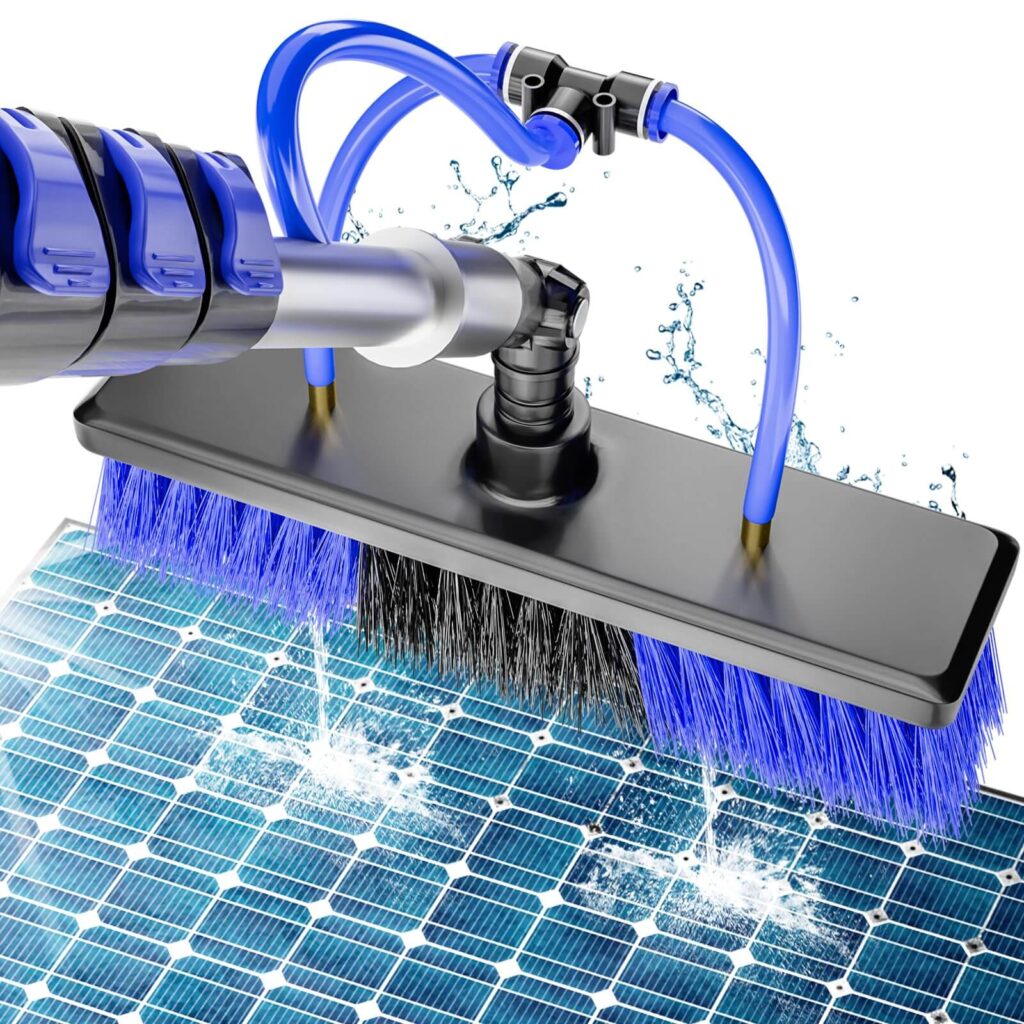
Anbule supplies telescopic poles and commercial washing machines to help secure these gains at scale.
Get a Custom Water Fed Pole Quote from Anbule
How does cleaning improve solar panel efficiency?
Cleaning clears particles and films that scatter or block sunlight. Even thin grime reduces the irradiance reaching cells, cutting power output. Tracking production before and after cleaning helps set the right maintenance cadence for each site.
What impact do dirt and dust have on solar panel performance?
Thin dust layers commonly lower production by a noticeable margin; site‑specific factors like pollen, bird droppings or industrial fallout can worsen losses. Regular cleaning avoids many preventable efficiency drops.
Published studies consistently confirm that accumulated dust has a significant effect on a panel’s power generation.
Impact of Dust on Solar Panel Efficiency & Power Output
From experimental results: dust deposition reduces the solar radiation reaching the panel and creates a shadowing effect. As dust density increases over time, electric power output falls. Reported data show power reductions up to 51.12%. In one study, module efficiency dropped from 15.9% (clean) to 7.88% (unclean).
Effect of dust on the performance of solar PV panel, K Sudhakar, 2013
Which methods are most effective for solar panel cleaning?
Choose a method based on array size, access and local soiling:
- Manual cleaning: Soft brushes and water for targeted, careful cleaning; labour intensive but low upfront cost.
- Automated cleaning: Robots or mechanised systems that run scheduled cycles for consistent coverage.
- Pressure washing: Effective for heavy grime but should be done by trained technicians to avoid damage.
Select the option that balances cost, safety and required frequency for your site.
What are the differences between manual and automated cleaning?
Key trade‑offs:
- Cost vs. scale: Manual has lower capital cost but higher ongoing labour; automation requires investment but scales efficiently.
- Labor needs: Manual relies on trained crews; automation reduces hands‑on labour.
- Consistency: Automated systems deliver uniform results; manual quality can vary by operator.
Small installations often suit manual cleaning; large commercial arrays usually benefit from automation.
Get a Custom Water Fed Pole Quote from Anbule
How do telescopic poles enhance solar panel cleaning?
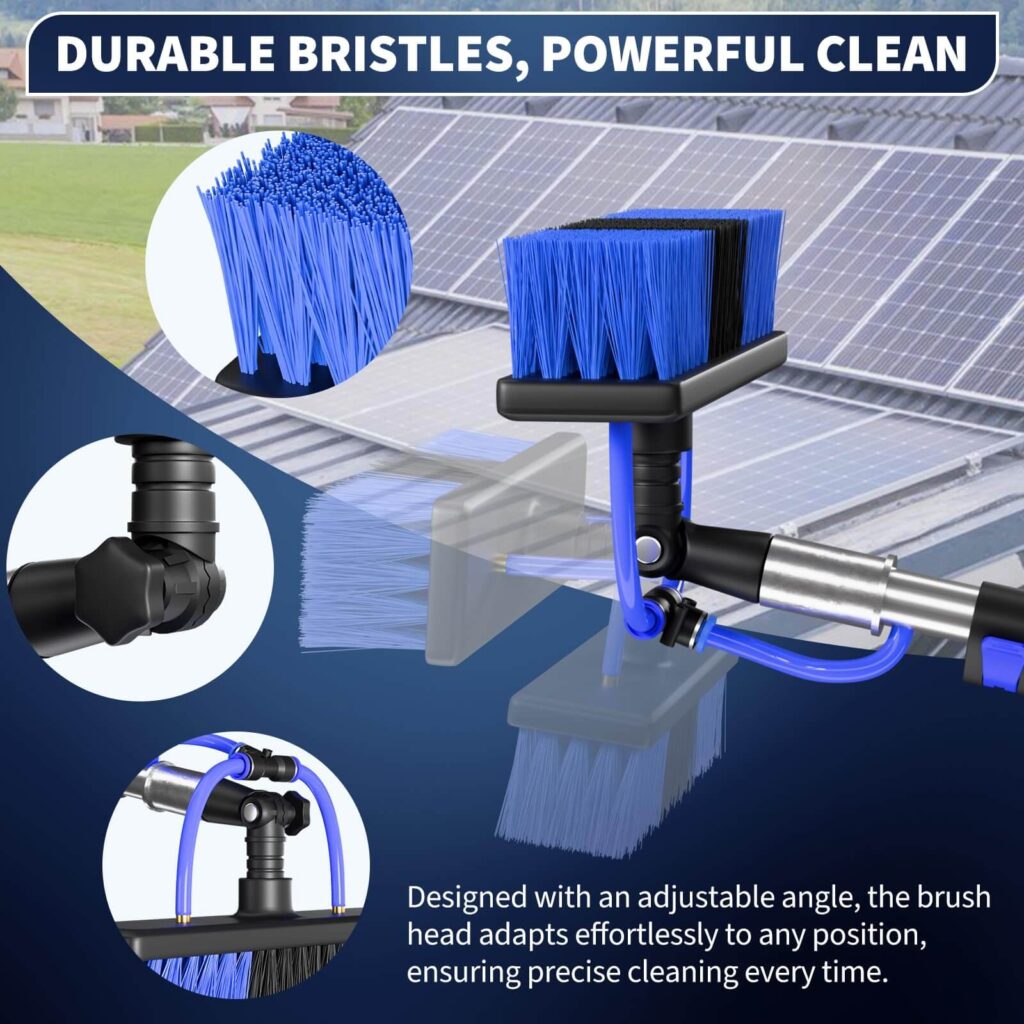
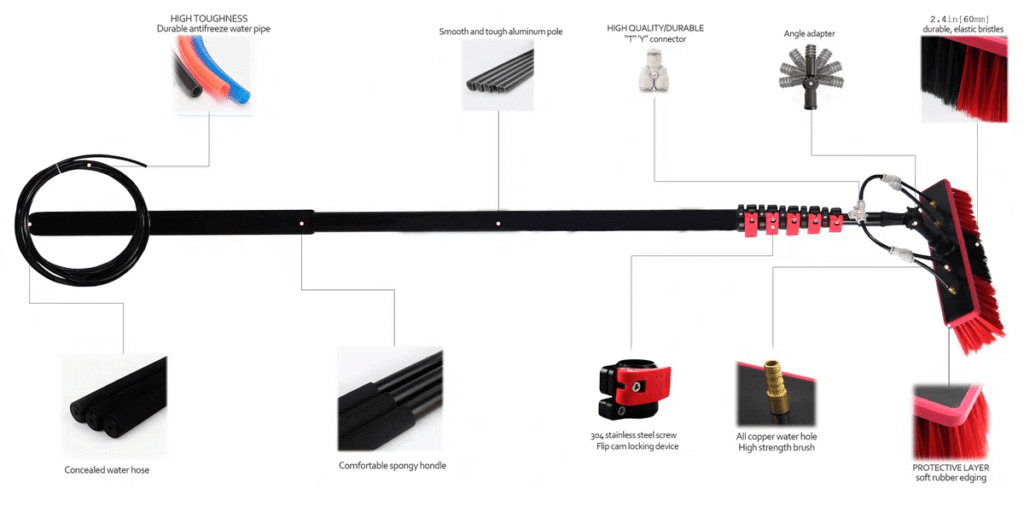
Telescopic poles improve safety and speed where access is limited, reducing ladder use and enabling crews to reach panels quickly. They can lower operating cost by reducing crew and equipment needs while maintaining care during routine maintenance.
- Improved safety: Minimise ladder and scaffold use, lowering fall risk.
- Faster access: Reach high or awkward panels without moving heavy gear.
- Lower operating cost: Fewer crew and less equipment for routine work.
How do solar panel washing machines improve cleaning efficiency?
Washing machines automate repetitive cleaning across large arrays:
- Speed and coverage: Clean wide areas much faster than manual crews.
- Consistent results: Reduce missed spots and maintain a uniform level of cleanliness.
- Long‑term value: Higher upfront cost can be offset by labour savings and improved energy yield.
Anbule’s solar panel washing machines are built for commercial sites that need speed, consistency and uptime.
What features make Anbule’s washing machines stand out?
Anbule focuses on practical features that improve cleaning outcomes and serviceability:
- Dual brush‑head technology: Covers more surface per pass for efficient cycles.
- High‑pressure pump: Removes stubborn grime when used correctly.
- Modular design: Simplifies maintenance and future upgrades to extend useful life.
Together, these features lower total cost of ownership and improve reliability.
Are automated cleaning solutions worth the investment?
For many commercial arrays, automation pays back through higher energy yields and lower labour costs. When calculating ROI, consider local soiling rates, energy prices and maintenance costs to estimate payback.
- Long‑term savings: Reduced manual labour and improved generation can offset purchase cost.
- Reliable efficiency: Regular cycles keep performance nearer rated output.
- Lower staffing burden: Less dependence on specialist crews and simpler scheduling.
What are the best practices and safety tips for solar panel maintenance?
Follow simple precautions to keep cleaning safe and effective:
- Electrical safety: Isolate and turn the system off before cleaning.
- Timing: Clean during cooler hours to reduce streaking and rapid evaporation.
- Use gentle tools: Soft brushes and non‑abrasive materials protect glass and coatings.
These practices help preserve performance and reduce maintenance risk.
How often should solar panels be cleaned for optimal performance?
Frequency depends on location and contamination. Inspect at least twice a year and increase checks in dusty, pollen‑heavy or bird‑active areas. Monitor output so you can clean when production drops due to soiling.
Finding the right cleaning schedule is a balance between cleaning costs and the revenue lost to reduced performance.
Optimizing Solar Panel Cleaning for Financial Profit
Allowing dust to build up can cause substantial monetary losses. The optimal cleaning interval balances the direct costs of washing against the revenue lost from reduced efficiency. The cited paper derives a formula to minimize total cost by choosing the best number of days between cleaning cycles. Solar panels cleaning frequency for maximum financial profit, M Abu‑Naser, 2017
What safety measures should professionals follow during cleaning?
Professional teams should use formal safety protocols to avoid accidents:
- Personal protective equipment: Gloves, eye protection and other required PPE.
- Training and certification: Ensure crews are trained on techniques and equipment.
- Emergency procedures: Keep clear emergency plans and first‑aid provisions on site.
If you have questions or need assistance, contact us today.
Get a Custom Water Fed Pole Quote from Anbule
How Important is Keeping Solar Panels Clean | FAQs
What are the environmental impacts of dirty solar panels?
Dirty panels reduce system efficiency, which can increase overall energy consumption and related emissions depending on the grid mix. Runoff from washing heavily soiled panels can carry pollutants; regular, controlled cleaning helps reduce these side effects.
Can rain effectively clean solar panels?
Rain removes loose dust but rarely clears stubborn contaminants like bird droppings, pollen or industrial grime. Relying solely on rain often leads to gradual output declines; periodic manual or automated cleaning is recommended.
What should I consider when choosing a solar panel cleaning service?
Choose a provider with experience, non‑abrasive methods, proper insurance and safety certifications. Request references and sample before/after reports or production results to verify effectiveness.
How does the location of solar panels affect cleaning frequency?
Location matters: dusty rural sites, areas near busy roads or industrial zones, and regions with heavy pollen or bird activity need more frequent cleaning. Monitor output trends to see when soiling affects production.
Are there any DIY methods for cleaning solar panels?
Homeowners can use a soft brush or sponge with plain water and mild cleaners during cooler parts of the day. Avoid harsh chemicals and high‑pressure hoses. For roof‑mounted or large systems, professional or specialised equipment is safer and often more effective.
What are the risks of not cleaning solar panels regularly?
Neglect can cause sustained efficiency drops, higher electricity costs and slower payback. Over time abrasive particles and corrosive deposits may damage surfaces and require repair or replacement.
How can I monitor the performance of my solar panels?
Use a solar monitoring system or installer app to track real‑time production and trends. Sustained drops in output usually indicate soiling or a maintenance issue; compare expected vs actual production regularly to spot problems early.
Conclusion
Regular cleaning is a high‑impact way to protect energy production, reduce operating costs and extend system life. Identify your site’s soiling patterns, pick the right method — from manual care to automated washing machines and telescopic poles — and schedule maintenance based on measured performance. Explore Anbule’s cleaning solutions to improve uptime and maximise the value of your installation.
Related reading: Cleaning methods and equipment matter just as much as frequency. See the most common water fed pole problems — and how to avoid them when maintaining your panels.
 English
 Deutsch
 Français
 Polski
 Português do Brasil
 Español
 日本語
日本語 Русский
 العربية
 Italiano
 Nederlands
 Türkçe
 한국어
한국어