
Clean panels produce more power. Knowing how often to clean your array helps protect performance and payback. This article walks through the key factors that set cleaning frequency, the measurable benefits of regular maintenance, the best methods for different setups, and when professional services make sense. Read on for practical guidance you can apply to rooftop or commercial systems.
What Factors Determine the Ideal Solar Panel Cleaning Frequency?
There’s no one-size-fits-all schedule. How often you clean depends on the local environment, how you monitor output, and where the system is installed. Use these signals to create a cleaning plan that preserves yield without wasting time or resources.
Get a Custom Solar Panel Washing Machine Quote from Anbule
How Do Environmental Conditions Affect Cleaning Needs?
Dust, pollen, bird droppings, and pollution all cut sunlight before it reaches cells. Arid, dusty regions and sites near construction or heavy traffic usually need more frequent cleaning; in climates with regular rain, natural washing often reduces manual cleaning needs. Factor local weather, seasonality, and nearby dust sources when setting intervals.
Published studies confirm that environment-driven cleaning schedules materially affect plant performance.
Solar Panel Cleaning Frequency & Performance
The study quantifies how increasing cleaning frequency raises PV output, with performance gains varying by site and schedule. The reported percentage improvements depend on local soiling rates and how often panels are cleaned.
Impact of solar PV panel cleaning frequency on the performance of a rooftop solar PV plant, MN Alam, 2021
Why Is Monitoring Energy Output Crucial for Scheduling Cleaning?
Energy monitoring provides an objective trigger: when generation drops relative to expected production (accounting for weather), it often indicates soiling. Regular monitoring reveals trends and helps you move from calendar-based cleaning to condition-based cleaning, which saves money and preserves yield.
Research highlights that cleaning is most impactful once panel efficiency falls below a measurable threshold, so monitoring is key.
Optimal Solar Panel Cleaning for Efficiency
This paper models how dust and temperature reduce power output and recommends cleaning once panels fall beneath defined performance limits. In practice, that means cleaning when monitored output shows a persistent decline.
Impact of dust and temperature on photovoltaic panel performance: A model-based approach to determine optimal cleaning frequency, Y Shen, 2024
What Are the Benefits of Regular Solar Panel Cleaning?
Regular cleaning protects production and equipment. Clean modules deliver more energy, suffer less stress from hotspots and soiling, and can extend the system’s useful life — all of which improve long-term returns.
How Does Cleaning Improve Solar Panel Efficiency and ROI?
Soiling can reduce output by roughly 5–20%, depending on local conditions. Keeping modules clean keeps them near rated performance, increasing energy yield and improving ROI — especially for commercial sites where every additional kilowatt-hour matters.
What Are the Risks of Neglecting Solar Panel Maintenance?
Ignoring maintenance lets efficiency losses accumulate and can accelerate wear. Built-up grime may cause hot spots or micro-damage that lead to repairs or premature replacement. Regular cleaning minimizes those long-term costs and operational risks.
Which Cleaning Methods Are Best for Different Solar Installations?
Choose methods that match site scale, access, and soiling. Small rooftop arrays can be handled manually; large commercial or utility-scale plants often benefit from automated or semi-automatic systems that balance cost, speed, and cleaning quality.
Get a Custom Solar Panel Washing Machine Quote from Anbule
What Are the Pros and Cons of Manual vs. Automated Cleaning?
Manual cleaning is precise and low-tech but can be slow and labor-intensive. Automated systems offer speed and repeatability but require upfront investment and may struggle with stubborn deposits. Many operators combine approaches: scheduled automated cleaning with spot manual work where needed.
How Does Anbule’s Solar Panel Washing Machine Enhance Commercial Cleaning?
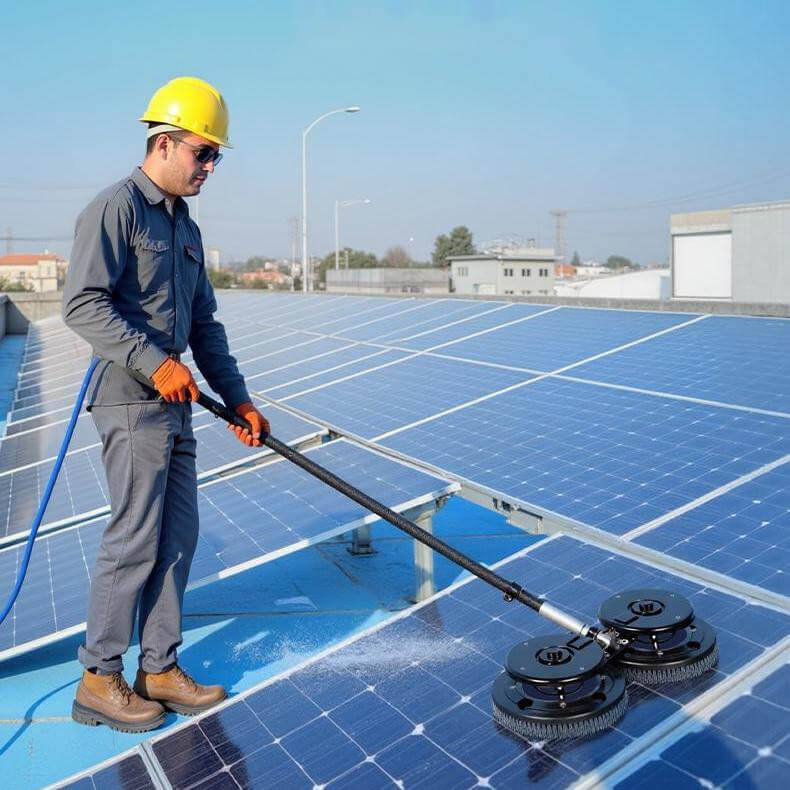
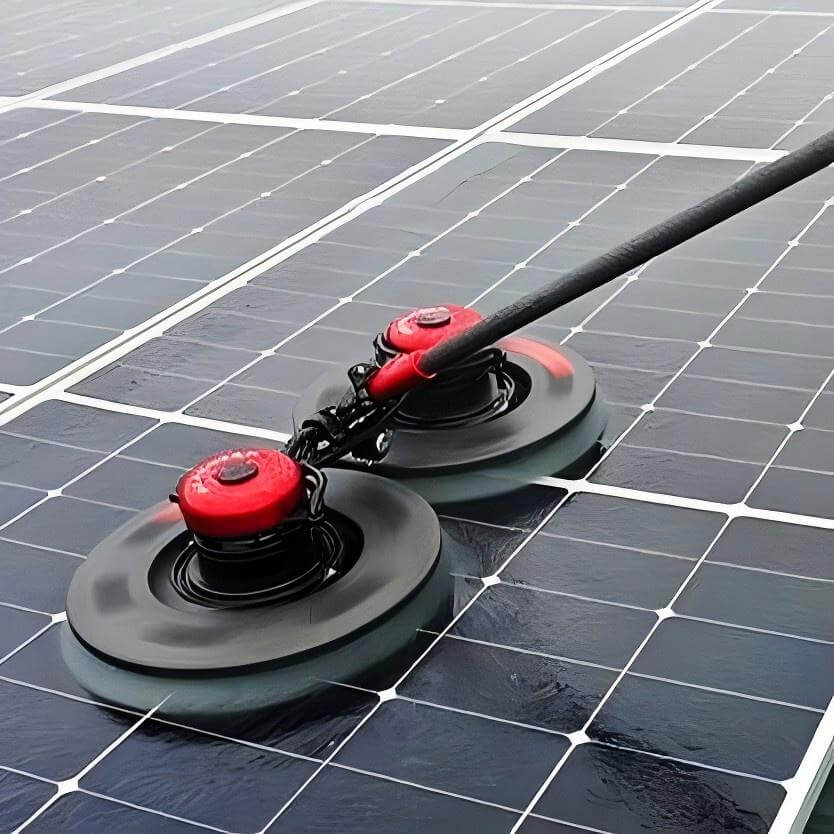
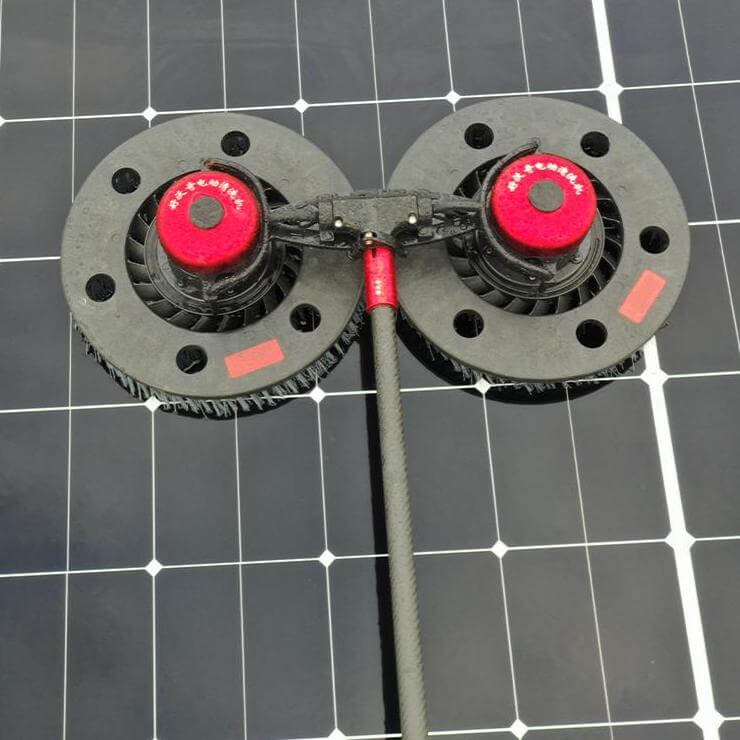
Anbule provides a semi-automatic solar panel washing machine that speeds large-scale cleaning. Using telescopic poles and engineered brushes, it cleans safely from the ground and reduces the need for ladders or scaffolding. For contractors and facility managers, that often means faster service, lower risk, and more consistent results.
Experimental work shows measurable efficiency gains when semi-automatic systems are used to reduce dust buildup.
Solar Panel Efficiency Loss & Cleaning Benefits
The study reviews how dust blocks incident light and lowers module efficiency. It evaluates a semi-automatic cleaning mechanism that aims to restore output by removing accumulated dust. Results from the experimental model show an observable improvement in panel efficiency.
Performance Analysis of Semi-Automatic Solar Panel Cleaning System, SR Bhandari, 2024
How Can Professional Solar Panel Cleaning Services Optimize Maintenance Schedules?
Professional cleaning services bring experience and data-driven routines. Technicians can assess soiling patterns, recommend an appropriate cadence, and deploy the right tools for safety and effectiveness.
When Should Commercial PV Plants Schedule Professional Cleaning?
As a rule of thumb, commercial PV plants should plan at least one to two professional cleanings per year, increasing frequency in dusty or polluted areas. Regular performance checks will tell you whether that baseline needs adjustment.
What Role Do Telescopic Poles and Specialized Equipment Play?
Telescopic poles, soft-bristle brushes, and low-pressure rinsing let teams clean safely from the ground and protect module coatings. Using the right equipment reduces risk, speeds service, and helps avoid inadvertent damage that can occur with improper methods.
In short, the right cleaning rhythm balances local soiling rates, monitoring data, and operational cost. Combine smart monitoring with the appropriate cleaning method to maintain peak performance, extend equipment life, and protect your investment.
How Often Should Solar Panels Be Cleaned | FAQs
How can I tell if my solar panels need cleaning?
Track energy output and compare it to expected production for local weather. A sustained drop in generation is the clearest sign panels need cleaning. Visual checks for dust, bird droppings, or streaking also help — when you see obvious soiling, it’s time to act.
What is the best time of year to clean solar panels?
Timing depends on your climate. Many operators clean after high-soiling seasons — for example, spring after pollen or late summer after dusty winds. Avoid cleaning in extreme heat; early morning or late afternoon are safer and reduce thermal stress.
Can I clean my solar panels myself, or should I hire a professional?
Small, accessible systems can be cleaned safely by owners following proper guidance. For large, rooftop, or difficult-to-access arrays, professional crews deliver safer, faster, and more reliable results. If you DIY, use non-abrasive tools and prioritize fall prevention.
What cleaning solutions are safe for solar panels?
Plain water or a mild, biodegradable soap is usually sufficient. Avoid harsh detergents, abrasive pads, or high-pressure washers that can damage coatings or seals. Rinse thoroughly to remove residue and protect surrounding landscaping and drains.
How does the angle of solar panels affect cleaning frequency?
Steeper panels shed water and debris more easily, so they often need less frequent cleaning than flat-mounted arrays. Flat or low-tilt installations hold dust and require closer monitoring and more frequent cleaning.
What are the environmental impacts of solar panel cleaning?
Cleaning uses water and, occasionally, cleaning agents. To reduce impact, use efficient rinsing systems, capture rainwater where possible, and choose biodegradable soaps. Thoughtful practices minimize wastewater and protect local ecosystems.
Get a Custom Solar Panel Washing Machine Quote from Anbule
Conclusion
Keeping panels clean is a straightforward way to protect production and returns. Use environmental context and monitoring data to set a practical cleaning schedule, choose methods that match your site, and call in professionals for larger or risky jobs. If you’d like help defining a cleaning plan, explore our professional services to find an approach that fits your system and budget.
 English
 Deutsch
 Français
 Polski
 Português do Brasil
 Español
 日本語
日本語 Русский
 العربية
 Italiano
 Nederlands
 Türkçe
 한국어
한국어